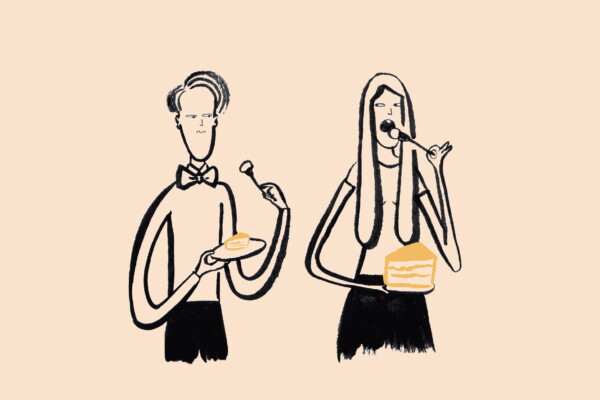
Cake, sex and fame. Their lure is strong. If something pushes our sweet, sex or status buttons, we spark right up. Why? Because, ostensibly, these things give us pleasure. But do they make us happy?

Consider this: we live in an age of unprecedented wealth and freedom, yet our society is experiencing an epidemic of despondency and depression. Many studies show that, despite a level of affluence that would have shocked our great-grandparents when they were our age, we are actually no happier than they were. In some ways, we are even less satisfied with our lives.

Many of us work ourselves into the ground in pursuit of enough dollars to chase fleeting pleasures in our evershrinking free time. We eye luxurious goods and yearn for that next promotion. Yet the buzz from that new car or the high after landing that new job quickly fades, only to be replaced by sparkling new desires. The hedonic treadmill just keeps on rolling and we just keep on running.

How can this be? You’d think for something that presumably motivates our most important life decisions, we’d have a better understanding of what makes us happy. However, all too often, we just arrive back at cake, sex and fame.

Yet we only have to look as far as evolution to understand how we got into this mess. And possibly even to see how to step off the hedonic treadmill. We are, after all, biological creatures, with biological needs shaped over many millions of years by natural selection. Chief among those needs are sustenance, reproduction and social influence.

Consider the hapless organism that failed to prioritise these things. It wouldn’t have lasted long, and neither would its genes.

Gathering food and hunting prey are hard work, yet without the fuel they provide, energy levels drop, giving an edge to competitors and predators alike. Gathering and hunting, and myriad other tasks, are also made easier through cooperation in social groups. Yet with social groups there are hierarchies. Those at the top reap the most rewards – such as their choice of mates – while those at the bottom fight over the scraps. The individual who failed to seek status often ended up dominated by those who did.

Even a singularly prosperous individual that didn’t make the effort to breed would end up as an evolutionary dead end. On the other hand, those disposed to breed like crazy saw their genes spread – including the genes that encouraged them to breed like crazy. That’s evolution 101.

So, if you were designing an organism, how would you ensure it sought out what it needed to survive and reproduce? How would you encourage it to seek out sustenance, reproductive opportunities, security, social companions? How would you have it avoid injury, predators, hostile rivals?

Evolution’s solution was to imbue us with a slew of motivational programmes that encouraged us to seek those things that contributed to our reproductive success. These are our evolved heuristic buttons. If something pushes them, we’re hardwired to react. And, ostensibly, all these buttons serve our biological needs. Or, at least, they used to.

Sweet and fatty foods tend to be energy dense. Half a million years ago, they represented a rich and rare resource that fuelled our daily activities. Pluck some ripe fruit, or luck upon some honey, and thanks to our sweet button we would make sure we paid close attention to such delicacies in the future. Yet today, in a society built by people possessing such buttons, we have invented modern monstrosities that push our buttons with an intensity that evolution never anticipated. Things like cake.

We have many other buttons that also serve our biology. The sex button, naturally enough, encourages reproduction. The status button helps us identify and attract a high quality mate. The love button helps us attach to them, and the jealousy button helps us keep them. Yet today, wanton lust, promiscuity, STIs, unwanted pregnancies and an industry built around debased titillation are the result. Not to mention an industry that revolves around obsessing over distant high-status individuals and gossiping about their every relationship quibble.

The problem today is that we have mistaken the buttons for the ends they evolved to serve; we chase the heuristics that serve our biological needs and leave our needs themselves unattended. We pursue the pleasure triggered by sweet and fatty foods and our health suffers. We chase the joy of sex and get ourselves into all sorts of trouble. We pursue status and achievement, and end up driving ourselves to exhaustion in an unwinnable battle. We have so much freedom to pursue our own happiness, yet with it we simply chase the tail of happiness that wags the dog of genuine contentedness.

Our consumer culture even rewards such behaviour. That pleasure is fleeting is the greatest gift evolution could lend the purveyors of pleasurable goods. Buy one, get a buzz, drop into a slump until you buy another. And on it goes until it’s reported with alarm in the nightly news when consumption drops a few per cent.

This is all because the effect of pushing the buttons – the pleasure hit from a piece of cake or a promotion at work – is transient. They’re designed by evolution to be that way. If we gained lasting satisfaction from something, then we wouldn’t be inclined to seek it out again at our earliest convenience.

The buttons also adapt to conditioning. Push the sweet button, or the kinky button, a few too many times, and you have to push them even harder to get a response the next time. So not only are we wedded to the treadmill, but the treadmill is constantly speeding up.

Then we’re compelled to buy more goods to fix the problems caused by unattended needs. It’s no accident that gym memberships and diet books are boom industries.

It is possible to step off the hedonic treadmill, if we choose to do so. It’s not easy at first, but it can be done. And your needs will thank you for it in ways your wants never could.

When we wind back the lavish treatment we lend our evolved buttons, they naturally protest. After all, they’re just doing their job – for all they know, you’re denying your body those things it desperately needs. In the face of this protest, we can wheel out brute willpower. But using willpower alone to deny ourselves pleasure is a losing battle. That’s why so many people only ever dabble in denial. However it’s not actually denial that brings relief. Rather, it’s identifying and serving our actual needs themselves more directly.

These aren’t necessarily defined by the strictures of evolution any more. But if we can make ourselves aware of our biological needs, then we can decide for ourselves which things are really important.

Nutritious wholesome food, and sufficient time to prepare it, for example, feeds more than our bellies. Rich and supportive social relations help lift us up and cushion us when we’re down. Meaningful work pays for itself. Time spent looking after ourselves keeps our desires in check. An absence of negative experiences in our lives is often more conducive to our well-being than an abundance of positive ones.

And above all is the wisdom to spot when our evolved buttons – and those who seek to profit by pushing them – are steering us away from what really matters. Cake, sex and fame give pleasure. Sometimes even fleeting happiness. It’s fine to enjoy them from time to time, but not so good if you’re a slave to them. They are only the tail. If you really want to, you can chase the dog instead.

Close