
Muireann Irish
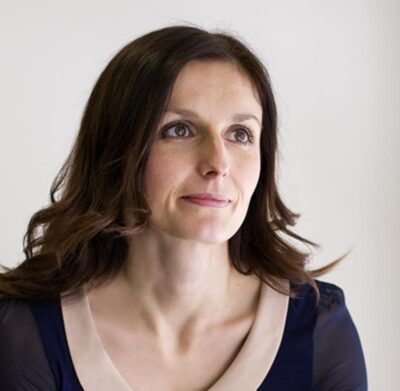
Muireann Irish is Professor of Cognitive Neuroscience in the School of Psychology and the Brain and Mind Centre at the University of Sydney.
We all intuitively think that memory is a repository of past information that enables us to retrospectively review things that have happened. While this is one important aspect of memory, it turns out that this may not be its primary function.
From an evolutionary standpoint it doesn’t really make sense to accumulate a vast repository of knowledge and events if we are not going to put that information to some kind of adaptive purpose.
Almost 20 years ago, a major paradigm shift occurred within the field of cognitive neuroscience, when it was suggested that memory is not merely past-oriented, but may serve an important future-oriented or prospective function. Several studies demonstrated that the brain regions that activate when we remember the past are also implicated when we envisage future events that have not yet occurred.
The robustness of this finding prompted a reconceptualisation of memory as not merely a review of the past, but as a tool to guide future actions. Viewed in this light, the evolutionary function of memory may be to promote successful future behaviour. For example, remembering where you encountered a predator or where you were under threat enabled our ancestors to survive by adapting their future behaviours accordingly. Similarly, knowing where good resources occurred, such as food or mates, enabled our ancestors to attune their actions to improve their odds of survival.
So, rather than thinking about memory as something reproductive, we now view memory as a constructive endeavour. Every time we bring a past event to mind, we are actively reconstructing what occurred, and in turn, we use the elements of memory as building blocks to construct possible future events that we have not yet experienced. This is a hugely powerful expression of human thinking and represents a completely new way of thinking about what memory means and how it serves us.
As humans, we have an innate tendency to use metaphors to understand the various computations and functions of the brain. While technological analogies are widely used, for example, the brain as computer, older versions viewed the brain as a filing cabinet. Accordingly, memories were viewed as just sitting there ready to be reviewed; all one had to do was open the correct drawer and pluck out the fully formed memory to review.
Of course, we now know that memory does not operate in this manner. As I mentioned, when you remember a past event, the brain actively reinstantiates the original pattern of activation that occurred at the time you first experienced the event. It coordinates the reactivation of sensory and perceptual contextual details, for example what you saw, heard, smelled, and felt emotionally, and it reassembles these details into a coherent ensemble that you can then re-experience.
So, in essence, there is no single memory in your brain – rather the brain actively reconstructs the original experience every time we remember.
Yes, in the case of memory for events, or episodic memory, which is the type of memory we typically refer to. But human memory also encompasses a general conceptual store, known as semantic memory. This is the type of memory that enables us to remember facts, for example “Paris is the capital of France”. Semantic memory is laid down in interconnected networks, so that one concept can trigger another one, and so forth, and in this case, the archival repository may be more appropriate.
Autobiographical memory is closely intertwined with our sense of who we are. One of the functions of autobiographical memory is to promote a sense of identity and continuity across subjective time. This not only lets us review our past but enables us to envisage ourselves in the future, ensuring we construct a stable representation of ourselves across our temporal timeline.
Even though I’m here talking to you as a scientist today, this has very little to do with how I used to be when I was eight years old doing cartwheels in the garden in rural Ireland. But inherently I recognise that I am the same person as that little girl - there is a golden thread uniting all the experiences I’ve had from that point up to now. This enduring and stable sense of ourselves as distinct individuals gives us continuity across past, present and future contexts, even with so much change occurring in between.
The self-concept is also remarkably flexible as we can accommodate new experiences into our view of who we are. We meld new occurrences into our sense of self, either by confirming our beliefs about ourselves, or by updating our view of who we are. This is commonly observed in the case of trauma survivors. Some individuals may incorporate a traumatic event into their concept of self, while others might repress the memories, not seeking to be defined by the experience, perhaps as a means of self-preservation.
The experiences we have across the lifetime fundamentally shape who we are, how we view ourselves, and even how others view us. Autobiographical memories have a social or collective function, enabling us to come together to share our stories.
One of the idiosyncrasies of autobiographical memory is that some moments can remain extremely vivid while others fade into the background. The vividness of autobiographical memories is an active area of scientific research, as we all experience the world in different ways. These individual differences mean that no two people will perceive, encode, or retrieve an event in exactly the same way. I have had very interesting conversations with my brothers where one of them will say, “Do you remember that time when X happened?” and I have absolutely no recollection of it, even though I was the main person in the event. For someone who studies human memory, this can be quite disconcerting!
This speaks to the fact that human memory stores are limited. Given the amount of information we encounter from moment to moment, it wouldn’t be computationally efficient to remember everything. To cope with this volume of information, we are constantly prioritising and filtering what we should attend to and what should be committed to memory.
As we get older, an interesting phenomenon called semanticisation occurs. We become much more adept at abstracting meaning from experiences and grouping events together in terms of defining themes or time periods. However, this comes at a cost whereby we sacrifice some of the specificity of individual occurrences. So, there is a shift from precise retrieval of events to more integrated retrieval across themes or epochs. We have recently argued that this change in memory should not be viewed as a decline in memory function but rather an adaptive shift, the product of which is a much more integrated and compelling narrative.
At the same time, the early memories that define our sense of self tend to be preferentially recalled. A “reminiscence bump” is commonly observed in studies of autobiographical memory, and reflects the fact that we recall more memories from our late teens to early adulthood period. Intuitively, this makes sense as the majority of events that occur during this time are highly formative, such as our first love, our first heartbreak, first job, major exams, graduation, getting married, or having children. As such, the reminiscence bump is likely a product of this defining time period where our adult identity is consolidated. This phenomenon is consistently documented across different studies and cultures, and is even observable in patients with Alzheimer’s disease, suggesting the preservation of islands of memory upon which the person’s sense of self is based.
I think it is probably a combination of both. During early adulthood, we are experiencing more novel, more important and more salient events, but the brain is probably more mature in how it processes all these multisensory experiences and embeds them within a coherent story.
As I alluded to previously, older adults are very good at contextualising experiences within their overall life story, yet current assessment approaches tend to penalise the way older adults approach autobiographical retrieval. This is a real bugbear of mine because we are testing memory in a way that prioritises details, almost like a forensic interview: What did you wear? Who was there? What time? Give me the place. This is not naturally how we would share a memory in a social context.
When you interview older adults and ask them about their experiences, they don’t tend to prioritise the provision of fine-grained sensory-perceptual details. Rather, they will zoom out and contextualise the experience for you. They situate events within a rich narrative that’s much more compelling than a list of very precise and specific details.
Several studies have demonstrated that the narratives of older adults are consistently rated by younger and older adults alike as being more compelling, more interesting and more evocative relative to their younger counterparts. Crucially, these ratings are done “blind”, meaning the identity of the person who created the narrative is not known to participants. So as I mentioned, memory is not necessarily compromised in older age; rather, we see a shift or prioritisation towards contextualising experiences to ensure they can be shared socially, often spanning generations.
We have recently argued that older age should perhaps be viewed as the pinnacle of autobiographical memory attainment, because older adults have encoded a wealth of experiences across the lifespan, contextualised these experiences, and can extract meaning to share with people from different backgrounds and across generations.
As a field, I think we need to take stock and reappraise this fixation on details as being the Holy Grail of memory retrieval. Older adults provide an important counterpoint to this argument and demonstrate a distinct advantage in terms of storytelling.
This is a huge question in the developmental literature: why do we have little to no recollection of our very early years, given we have so many new experiences during that time?
It may be that the brain systems are not mature enough to support the complexity of encoding and retrieving multidimensional experiences. However, a very interesting phenomenon occurs around the age of seven, where suddenly all the systems start to come online. The brain’s construction network, or default mode network, seems to kick in, and children begin to recall autobiographical experiences, think about the future, and show empathy and consideration for others. All of these functions are clicking in around the same time, which suggests there is a huge developmental shift happening in the brain.
Scientist Thomas Suddendorf has noted that around this time, children start to have their first existential crisis, because now that they can look ahead to the future they realise that the future is not forever and they start to worry about mortality.
I have had these conversations with my youngest child, who will ask me about death, what happens when we die, and whether we go on forever. So, while we acquire this powerful cognitive capacity to mentally travel across past and future, to imagine and conjure new scenarios, it brings with it the sobering realisation that we are not immortal, which in turn can bring anxiety, and a sense of impermanence.
In the case of children, we see much more flexibility in their cognitive processes and the computations that they can perform, which in turn means they become more adept at planning. For younger children, once the capacity to remember distinct experiences emerges, you can review events with them and discuss why they went well or what they might change in the future. From a very practical perspective, you can start to encourage planning such as “What will you need to bring tomorrow? Let’s pack your bag,” or, “Your homework is due on Friday. Let’s do a bit now so you don’t have to do it the night before.”
These examples occur over very short timescales, but as we get older and our cognitive systems become capable of more sophisticated expressions of imagination, we can start stretching out the temporal window and saying, “You’ve got exams at the end of the year. What do we need to do now to prepare?” Or, “Next year we might go on a holiday. What might that look like? Where should we go?” Rather than being whimsical forms of daydreaming, these cognitive processes enable us to envisage the future and plan for our success.
What’s really interesting is that we seem to have a limit in terms of how far ahead we can imagine. Most adults can imagine the next year in reasonable detail and indeed most studies have tended to use “next year” as the future timepoint. But if you ask adults to go 10 years into the future, that’s extremely difficult, because now we are veering away from the constraints of the current time period and the possibilities become much more open-ended. There is a whole life that could be lived that is unknown. Some people will default to semantic scripts of what typically happens at a certain age and they may respond with, “Well, I suppose I’ll get married. I suppose I’ll have a job. I guess I might have a child.” Rather than representing episodic constructions, such instances are much more like semantic scripts or schemas.
We have explored these types of temporally distal future thinking in older adults, and found that it is extremely difficult to look 10 years into the future. For example, if you are 70 years old and we ask you to envisage what being 80 is like, it may not necessarily be positive. People might imagine being frail, or having an illness or dementia, or thinking about their loved ones dying. As we get older, staying more present-focused may well be psychologically protective.
My motivation for studying dementia was because of my grandmother’s experience with Alzheimer’s disease. My grandmother had a formidable memory and a very sharp mind. She had been a midwife and ran a nursing home in Wexford, Ireland – this meant she knew all the dates of birth, birth weights, complications, parents’ names, and the gossip behind the births. She prided herself on knowing everything.
We’d walk down the main street and she’d point at a woman and say, “Eight pounds, two ounces, breech birth. He had an affair. He was down the pub when she was in labour...” It was impressive but, as I said, formidable!
When I was a teenager, we started to notice that Nan was making mistakes. She would forget what she had asked us, repeat stories, and sometimes get disoriented in the town she had lived in all her life. She would send me to the shop to buy something, but it would be the wrong shop or the wrong item she was asking for.
To see someone who prided herself on her memory and intellect start to lose little bits and pieces was extremely difficult. I cannot imagine the fear that she experienced during those years.
Finally, she was diagnosed with Alzheimer’s disease, and when it no longer was safe for her to live in her home, we made the decision to move her into residential aged care.
It was during this time that I decided I wanted to study psychology at university, and specifically to try to understand why memory breaks down. I was watching someone I loved lose her recent memories and become increasingly grounded in a time before I was even born. To me, she felt the same, but things had shifted in her. She was no longer operating in the same time period as us.
Now it is very clear that this grounding of the person with Alzheimer’s in the more remote past makes complete sense. Their identity becomes more anchored in the memories that remain accessible, which often occurred within the period of the reminiscence bump that I mentioned earlier. For Nan, this meant that much of her self-concept revolved around work, her medical training, midwifery, and her strong work ethic.
When we would visit Nan at the nursing home, she would often seem confused about why we were there. But in hindsight, this makes complete sense. The nursing home had quite a medical feel to it, and I believe that my grandmother interpreted this context as meaning she was at work. I look quite like my mother, so she probably thought I was her daughter, as that would make sense for the time period she was operating in.
But it was hugely confusing and confronting for my family as well. I remember watching my mother struggle when my grandmother would ask where her husband Mal was. I vividly remember my mum telling her, “Molly, Mal is dead.” This is our natural inclination, to want to correct someone when they say something that is inaccurate. However, at the time, I remember thinking how misguided this was. My grandmother was visibly distressed when she heard this news, as for her, she was learning this information afresh. We soon learned to not correct her but to enter her world, and to try to reconcile ourselves with her reality, rather than imposing our needs onto her.
Absolutely, I think we struggle to comprehend the internal reality of any disorder that is not overtly visible. With dementia, there is a tension between seeing the person that you have known for years or decades – on the surface they might appear the same, but internally they are experiencing a multitude of changes that are not initially clear to us. Empathy is hugely important in this respect.
In the case of my grandmother, I was acutely aware of not trying to drag her into my reality. I needed to step into her internal world and try to understand what she was experiencing. At university, I began reading voraciously about dementia, the brain and its memory systems, in a bid to understand what was happening to her. I would come home from university on the weekends to visit her and try to apply the lessons I had learned.
What became clear to me was that Nan was still very much herself. She still possessed her acerbic wit, she was still a strong woman, and she retained this strong drive to be useful and to work.
The manager of the nursing home also recognised this. She knew of Nan’s background as a hardworking midwife and she used this information to deliver more personalised care. For example, Nan would become very distressed when we would have to leave. However, Mary, the manager, would pop her head in and say, “Molly, I need your help, we’ve got a breech birth down the corridor,” and the change was remarkable. My granny would instantly stand up and stride purposefully down the corridor. She needed to feel useful and the care staff recognised this.
She also remembered where she had grown up. At times, when my mother left the room, she would ask me to get her suitcase and to help her to leave. I remember asking her “But where will you go?” And she narrated exactly how she would get back to her house, following the river Slaney until she reached the Quay, and then turning up George’s Street. This aspect of personal semantic memory was enduring.
But I think this also reflects the inherent drive for people living with dementia to want to go home. The family home remains a salient and important anchor point for them. This is a fundamental human need for comfort. When we are sick, or afraid, we all want to go to the place where we feel safe and for most of us, that place will be the home where we grew up and the reassurance we received from our parents. Having someone tell you that these family members are dead is, I think, completely misguided. We need to educate ourselves better.
At the same time, this can be hugely challenging for the family members, because ultimately you have to give up the idea of who you are to the person. I was no longer Nan’s granddaughter. Perhaps I represented her daughter, or maybe just someone familiar, whom she trusted. Towards the end, when she was very impaired and couldn’t verbally communicate, I remember just holding her hand and looking into her eyes. She was pleading with me, and I knew that she knew me and that I meant something to her. That was enough for me.
I think that’s probably one of the most confronting aspects of dementia. The family must reconcile itself with the fact that their most precious relationship (e.g., son, daughter, spouse) may need to be sacrificed. In that respect, we may lose our own sense of self. We can no longer define ourselves by the formative relationship we once had with the person, but perhaps we can forge a new relationship where we form a new bond. It’s an interesting idea, but I realise it’s very confronting for people.
This is something I think about quite a lot. Technology has irrevocably changed the way we approach learning and memory, and unfortunately not always for the better. In many instances, we no longer seem to be engaging in the active process of learning, and this problem is permeating school classrooms and university settings.
A simple example is that of phone numbers. Before technology was prolific, you had to learn someone’s phone number by heart. This meant actively working to commit the number to memory and, if done successfully, such numbers could remain intact in perpetuity. I still remember all the phone numbers from my childhood friends. If you wanted to call someone, you had to know Alice’s number or Emer’s number, and dial it manually on the telephone.
There was a strong motor component to remembering: with old-fashioned telephones you had to hold the number in mind and punch it in digit by digit. You needed to pay attention, or you might make a mistake, in which case you would have to redo the entire sequence or face the consequences of a wrong number.
All of this meant we were actively
practising and rehearsing large strings of numbers and committing them to long-term memory. Now we don’t even think about the number. You just press the name. The simplicity is wonderfully efficient, but it does come at a cost.
Another more poignant example is how modern technology is changing our entire approach to memory. Before the advent of camera phones, we had cameras with rolls of film, which contained a limited number of shots. This meant that we had to pay attention to a scene or a moment and decide whether or not to capture it. In essence, we were making a conscious decision: “Is this a moment I want to remember?”
If yes, then you would take the picture. And then you would have to wait for the film to be processed before you could see the product of the shot. This represented another important event but one that was social in nature. People would gather together to share and review their photos, recounting the stories behind each picture and actively reconstructing the events.
This is all very different to what we see today. Now, the goal of the photograph isn’t necessarily to remember. It seems more centred on capturing the perfect shot and uploading it to social media. People seem more concerned with capturing every experience, then reviewing them later to select the best shot. The photos are then filtered or tuned for sharing online, cleaning up elements that we don’t wish to preserve and accentuating features that we want to highlight. The photo gradually moves away from the original experience towards a more stylised representation.
No, I don’t think it directly increases dementia risk, but I do think we lose something valuable by not actively paying attention to our experiences in the moment. Perhaps even more crucially, we lose the social aspect of coming together to engage in shared recollection. We no longer seem to sit face to face to look over someone’s holiday photos and hear about their adventures. Aside from this form of social connection being hugely important for brain health, I think we should never forget the simple pleasure of telling a good story.