A crowd descends upon parliament, or congress, or some other seat of power. Some in the crowd carry signs making demands of the government, while others carry flags. Perhaps some in the crowd throw rocks at the police, or even storm the government buildings. Or perhaps they smash shop windows and burn parked cars.
Is it a riot? Or a political protest? In the short term, the distinction matters because it will determine how the government responds to the crowd. If it’s a political protest, then, typically at least, the government will let the demonstration run its course – albeit within tightly prescribed boundaries (at this particular time, down these particular streets). But if the crowd is characterised as a riot, or worse, as looting, then a more violent response from the government is seen as warranted.
In the longer term, the distinction matters because it will determine whether or not the authorities feel obliged to respond in some way to what the crowd wanted. In other words, crowds that have been interpreted as ‘legitimate’ political protests will receive a political response. Of course, the precise shape of that response will vary according to the degree with which the government of the day sympathises with the protesters’ cause (not to mention the general popularity of the protest): at one end of the scale, the government might enact legislative change; at the other end of the scale they might announce a toothless inquiry or commission a report that they will duly ignore when the protests have died down.
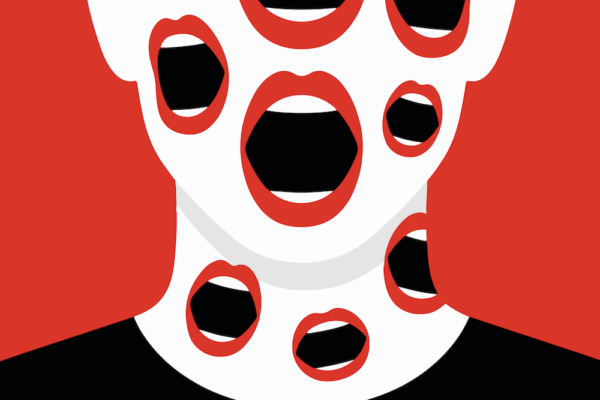
Still, across this spectrum, the common factor is that the crowd’s demands are heard as demands – that is, as political speech setting out a coherent set of requests that may or may not be acceded to. In contrast, when a crowd is characterised as a riot, or a disturbance, then the crowd is not heard as making political speech at all. Instead, the crowd is dismissed as making so much noise.
We might think here of the ‘riots’ across England in the summer of 2011. Triggered by the fatal police shooting of mixed-race man Mark Duggan, the ‘rioters’ engaged in widespread looting and arson. Unsurprisingly, they were uniformly condemned by both government and opposition politicians. But what was striking was the way that condemnation either elided the initial cause of the violence – a fatal police shooting – by characterising the riots as wanton, senseless and opportunistic, or else that the rioters were doing the legitimate cause of holding police accountable a disservice. The rioters were thus rendered in animalistic terms: their actions were either the expression of animal bloodlust, or, at best, an animal cry of pain and rage.
Is there another way of understanding a riot? In a subsequent study conducted by The Guardian and the London School of Economics, participants in the riots expressed consistent and deeply held feelings about discriminatory policing and a sense of not belonging in contemporary England. The French philosopher Jacques Rancière, drawing on Aristotle’s definition of the citizen as “he who partakes in the fact of ruling and the fact of being ruled”, argues that “everything about politics is contained in this relationship, this partaking”. In this sense of the political, the concerns and the resentments expressed by these interviewees were fundamentally political. That is, what seemed like so much furious noise was instead an expression of dissatisfaction with the political order. It was the political speech of people who feel that they are too much ruled, and partake too little in ruling.
Rancière’s understanding of politics is not limited to helping us better understand the meaning of riots. We might also think of school children striking for climate justice, and how often their protests are dismissed as the naïve noise-making of ill-informed minors. Or we could think of the way the Occupy movement was discredited by their failure to agree on a single program of action – allowing their opponents to characterise their demands for economic justice as the noise of a nonsensical rabble.
In both cases, we can see the operation of what Rancière calls the purportedly “natural” order “that destines specific individuals and groups to occupy positions of rule or of being ruled, assigning them to private or public lives, pinning them down to a certain time and space, to specific ‘bodies’, that is to specific ways of being, seeing and saying.” To put it another way, this naturalised political order is split in advance into public and private spheres. Political speech and action occur only in the public sphere, and only certain people – with certain bodies, who act, see and speak in certain ways – are presumed to be able to enter that sphere. All other people are relegated to the private sphere, to what Hannah Arendt described as the “dark background of mere givenness”.
Clearly, in this naturalised political order, children have the sorts of bodies (and minds) that are presumed to exist only in the private sphere. The case of adult protesters is a little more complex: while obviously capable of entering the public sphere, they do so conditionally: they have to conform to “specific ways of being, seeing and saying”. Rancière calls this conditionality the “distribution of the sensible”, in that the division of human life into public and private spheres presupposes a partition of sensory experience so that some sensory experiences are public, and others are private. Or, as Rancière puts it, “a distribution of what is visible and what not, of what can be heard and what cannot”.
One of the ways the “sensible” is distributed in Western liberal democracies is to allocate different kinds or registers of speech and action into the two spheres, public and private. Above all else, the speech and action that belongs in the public sphere is that which is “reasoned” and “reasonable”. Precisely what counts as reason is determined not so much by content as by how the speech or action looks, sounds and feels.
In this way we can see that Rancière’s is an aesthetic theory of politics. In the case of the Occupy movement, the broad demand for a fairer distribution of wealth (away from the top 1 per cent to the rest of the 99 per cent is not particularly unintelligible or even controversial. But where they “failed” was in the aesthetic forms in which they put that demand – in eschewing individual leaders who could speak authoritatively about a coherent set of demands in the name of the whole movement, Occupy failed to take on the aesthetics of those who “naturally” partake in ruling.
One response to this condition is to do just that – to mimic the ways of being, speaking and seeing of those who rule. So children might, for instance, be coached to speak like adults. Or a demand for an end to police brutality might be channelled into court, using the “reasonable” language of the rule of law. In doing so, protesters and movements hope to enter the public sphere, and be audible within it.
Rancière suggests a different response. Indeed, he argues that such attempts at audibility are not politics in its true sense at all. They are merely a conflict of interests or values within a given distribution of “common sense”, and as such ultimately work towards shoring up a presumed consensus about the dividing line between the public and private. Rancière’s definition of politics, in contrast, is precisely the speech or action which calls into question our established division between the public and the private, and which bodies, and which ways of being, belong where. In short, politics is that which calls into question presumptions about who partakes in ruling, and who is to be perpetually ruled.
In Rancière’s words, to practice politics is to introduce a “dissensus” – which is to put into dispute “what is given... the frame within which we see something as given.” On this view, what initially sounds like noise might actually be an attempt to establish a new given: a world without leaders, for instance, where people organise themselves non-hierarchically. Or one in which children have the greatest say over the future in which they will have to live.
Noise of the rabble
From this issue
Print subscription
Receive New Philosopher in print and enjoy full access to our digital archive.
View subscriptions