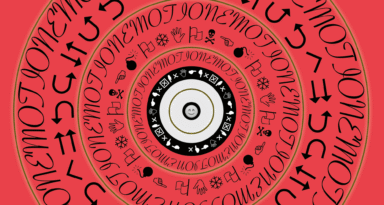

When we ask people how they are, we are, in essence, asking them about their mood because moods are how we orientate ourselves in the world. When we’re in a good mood, the world feels full of opportunity. When we’re in a bad mood, the same reality can seem overwhelming, even hostile. Heidegger’s concept of Befindlichkeit refers to the German phrase, “How are you?” Or, more literally, “How do you find yourself in the world?” Are you joyful, bored, melancholic, despairing? Your answer to that question shapes how the world reveals itself to you in that moment.
Moods are mysterious because they aren’t necessarily tied to anything specific, nor can we reliably predict which mood will show up. You might wake up to a beautiful sunny day – it’s Sunday, with nothing much planned – and you feel a brooding unrest. Or it’s your birthday, and you find yourself down in the dumps. Emotions, by contrast, are more intentional. You feel jealous of a coworker who received a raise when you didn’t, or worried about a friend who lost money in an investment scam. In philosophy, emotions are said to be ‘intentional’: they are directed toward something – other people, events, thoughts, or memories.
Moods, however, are different. Heidegger calls them attunements (Stimmungen), suggesting a sensitivity, as if we’re tuned into a particular frequency. Moods determine how we find ourselves aligned – or misaligned – with the world around us. They disclose what matters and what fades into the background. They shape what feels possible and accessible – or conversely, what seems pointless or beyond reach.
Philosopher Lars Svendsen, in Moods and the Meaning of Philosophy, argues that philosophy always begins in mood. Our moods prompt the questions we ask. “Philosophy does not begin in a state of cognitive or affective neutrality, but rather in a state of disturbance or bewilderment,” he writes. Wittgenstein similarly observed that a philosophical problem arises from a sense of being unable to orientate oneself – a sense of being lost. “You are driven to philosophy because something feels problematic,” writes Svendsen. Heidegger believed we are propelled into philosophical inquiry through what he calls the “fundamental mood of distress”.
This raises an interesting point: philosophical ideas do not arise in a vacuum. The are shaped by the prevailing mood of the author. Hypothesis, arguments, critiques, and insights may emerge only under certain moods; a single truth remaining hidden until a particular mood illuminates it. When Nietzsche advocated a “love of one’s fate” in The Gay Science – “I want to learn more and more to see as beautiful what is necessary in things” – he was evidently in a buoyant mood, far more so than when he wrote in Thus Spoke Zarathustra, “The Earth has a skin and that skin has diseases: one of its diseases is called man.” One could argue that Nietzsche’s immense philosophical range is intimately tied to his volatile moods, oscillating between creative exuberance and dark cynicism.
Curiously, few philosophers placed moods so squarely at the heart of their thinking as Heidegger did. “A mood assails us,” he writes in Being and Time. “It comes neither from ‘outside’ nor from ‘inside’, but arises out of Being-in-the-world, as a way of such Being.” In this work, Heidegger mentions the mood of angst, or anxiety, specifically. Anxiety being different from fear because it has no specific object; we might fear a snake, but we may find ourselves in an anxious mood for no apparent reason. Yet for Heidegger, an anxious mood could be illuminating, an existential phenomenon – exposing the emptiness that underlies everyday life, confronting us with our radical freedom, and reminding us of our finitude as beings destined for death.
It’s likely that Heidegger himself was prone to anxiety in some form. His daily routines – rising early and taking long solitary walks through the Black Forest – may have kept anxiety at bay. Although he occasionally hosted visitors at his hut in Todtnauberg, his love of solitude – living simply in nature, chopping wood, fetching water – undoubtedly shaped the tone of his writings: serious, grave, often tinged with melancholy.
We may contrast Heidegger’s writings to the later writings of Bertrand Russell, who by all accounts became cheerier as the years rolled by. The young Russell was afflicted with repeated bouts of depression, but as he aged, his mood progressively lightened. “With every year that passes I enjoy it more,” Russell writes in The Conquest of Happiness. Perhaps unsurprisingly, Russell’s philosophical interests included the delights of learning, intellectual curiosity, the value of reason and science, and the possibility of human progress. He even wrote a treatise on ‘happiness’ itself.
Svendsen ponders why certain philosophers speak to us more powerfully than others. He admits he has never felt quite “at home” in Spinoza’s writings as he has with Kant or Wittgenstein. Despite understanding Spinoza intimately and lecturing on his work, he wonders: “Could it be that I have simply failed to enter these texts in the proper mood?” Not only is a philosophical text infused with the mood of its author; when we read it, we too approach it in a particular mood. “If your mood and the mood of the text are at odds, there is the risk that the text simply will not ‘speak’ to you,” Svendsen observes.
Over a lifetime, we may return to certain authors or works when a certain mood assails us. We might seek out Schopenhauer when life feels overwhelming: “Life swings like a pendulum backward and forward between pain and boredom.” Or we turn to Nietzsche when we need a good pep talk on overcoming hardship and soldiering on: “You must be ready to burn yourself in your own flame; how could you rise anew if you have not first become ashes?”
Moods are like weather fronts drifting in and out without warning. You may wake under a low grey sky of melancholy, or find the morning inexplicably drenched in golden
opportunity. Like the weather, moods often resist deliberate change. Yet Nietzsche urges us to transform the chaos of our moods into “dancing stars”, channelling their energy into insight, creative work, or physical action, using them as the raw material for resilience.
Moods, though unruly, are also invitations – to know ourselves more deeply, to question what matters, and to discover where meaning lies. As Svendsen concludes, “Without a mood, you would not have any reason for orientating yourself towards one thing rather than another, because an absence of mood would also be an absence of mattering.”