
In our current cultural moment, when the boundaries between public and private have been largely erased, Calle’s investigations are prescient.


In 1979, Sophie Calle was walking through Paris when a man caught her eye. She began to follow him; not with any particular purpose, she would later say, but simply because she could. When, by chance, she encountered him again that evening at an art opening, she learned that he was planning to travel to Venice. So she went, too. She booked a room at a hotel, bought a blonde wig, and spent several days tracking his movements through the city’s labyrinthine streets. The man, whom she identifies only as Henri B., would eventually discover he was being watched when she ventured too close and he confronted her. “You should have masked your eyes,” he told her. It was her unguarded gaze that had given her away.

This was the beginning of Suite Vénitienne, one of Calle’s earliest and most influential works, and it established the unsettling terms of her artistic practice. For nearly five decades, the French conceptual artist has built her career on what might otherwise be called stalking, trespassing, and the invasion of privacy. Her photographs from Venice show Henri B. as a raincoated figure moving through the city’s backdrop, largely unaware that the artist was documenting his every step. The images are disturbing to the viewer because we immediately feel complicit in an act of surveillance. But they are also thrilling.

“I feel like I’m in love with him,” Calle wrote of Henri B., “but it is his very elusiveness to which I am drawn.” She followed him not out of any particular fascination with the man himself but for what she called the “pleasure of following”. Her accompanying text reads like the diary of someone falling head over heels, except that the object of her affection remains completely unknowable; and that, she suggests, is precisely the point. The gap between her intense internal experience and his ignorance of her existence becomes the true subject of the work.

The following year, Calle took a job as a chambermaid at a hotel in Venice. For three weeks, she used a camera and tape recorder, hidden in her cleaning supplies, to document the private lives of the guests whose rooms she was assigned to clean. She rifled through their belongings, transcribed their unsent postcards, and photographed the contents of their wastebaskets. She recorded the creases in bedsheets where bodies had lain and catalogued the intimate detritus left behind by strangers.

The resulting work, The Hotel, presents itself as a kind of forensic diary, organised by room number and filled with meticulous observations. (“In a set of drawers in Room 30: socks, stockings, bras... very well equipped,” she notes.) The photographs and text create the illusion of intimacy. Yet for all the detail, the actual individuals remain ghostlike, known only through the debris of their temporary presence.

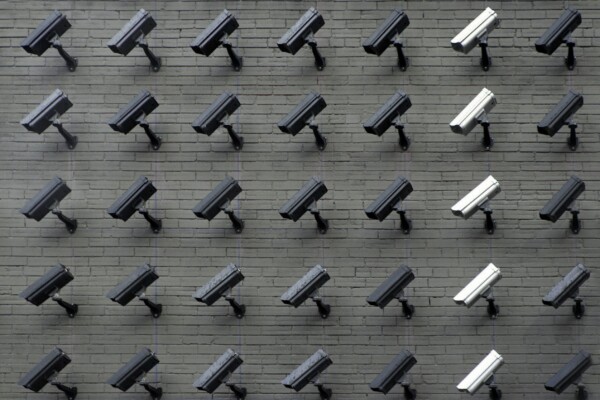
What Calle discovered, through this and other experiments, is that surveillance without context yields only empty data, an insight relevant in our current moment. We live in an age of perpetual observation, where our phones track our movements, our searches are archived, and our most private thoughts become fodder for social-media platforms. Algorithms attempt to decode our emotions, and corporations mine our feelings for profit. Yet for all this surveillance, Calle’s work suggests, something essential always eludes the watchers.

This radical disconnect between what can be observed and what can be understood runs through many of Calle’s pieces. In The Detective (1980), she hired a private investigator to follow her through Paris for a day, while she deliberately visited locations that held deep personal significance: the Luxembourg Gardens, where she’d had her first kiss; a café where she’d had a difficult conversation with her father. The detective’s report, written in the flat, clinical language, noted only her external movements: “The subject crosses the Jardin du Luxembourg at 3:47 pm.” Calle’s own account, by contrast, overflows with memory, emotion, and meaning.

Take Care of Yourself pushes this thesis to its logical extreme. After receiving a breakup email from a lover – a message that concluded with the phrase “take care of yourself” – Calle invited a hundred and seven women to analyse the text through the lens of their professional expertise. A psychiatrist provided a clinical interpretation; a judge examined it for legal implications; a crossword compiler transformed it into a puzzle; a corporate head-hunter compiled a report on the ex-lover’s prospects in the job market. Calle’s own emotional response is conspicuously absent from the project, but through the interpretations of these other women, the contours of the failed relationship begin to emerge. Or do they? The multiplication of perspectives reveals not clarity but rather the impossibility of any definitive reading.

The ultimate test of Calle’s philosophy comes in Couldn’t Capture Death, an eleven-minute video that records her mother’s final moments. Here, at the most intimate threshold imaginable, the camera continues to roll. Yet death itself remains beyond the reach of any lens. The body stops moving, but whatever constituted the person has already vanished into a realm that no amount of surveillance can penetrate.

Calle’s practice has always been concerned with these moments of slippage, in the spaces where observation fails to yield understanding. Her most recent exhibition, Êtes-vous triste? (Are you sad?), which ran to through September 2025, takes its title from a question posed during a medical examination, when she was asked to verify her emotional state for a doctor’s records. The moment captures the absurdity of trying to quantify inner experience, and the show brings together more than twenty years of work that consistently returns to questions of emotional authenticity and the limits of knowing.

In our current cultural moment, when the boundaries between public and private have been largely erased, Calle’s investigations are prescient. She anticipated, by decades, the dynamics that now govern our daily existence. But her work also offers a kind of resistance to the totalising ambitions of digital surveillance. Despite all the cameras, all the data harvesting, all the algorithmic attempts to decode our inner lives, we remain fundamentally unknowable – even to ourselves.

This is Calle’s most radical proposition: that in our rush to surveil and be surveilled, we have overlooked the fundamental fact that the most important parts of human experience remain invisible. They exist not in what can be observed but in what forever eludes the gaze, in the interior landscapes that no camera can document, no algorithm can decode, and no amount of following can ever truly reveal.


From the News from Nowhere section of the Observation edition of New Philosopher, available from our online store

Close