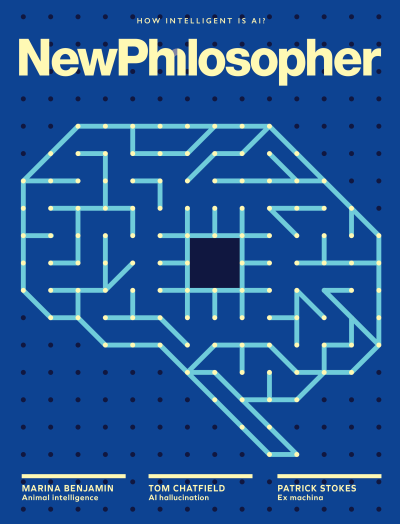
Interview with artist David Plunkert
Tell us a little about your background as an artist. When did you start illustrating? I went to school for graphic design in the mid- 1980s.
The program didn’t teach illustration per se but it was very focused on image and mark making. When I got my first full-time job as a designer many of my assignments required illustration. I would sometimes art direct other illustrators, but often I would make the illustrations myself. When I left that position in 1993 to go freelance I focused primarily on getting illustration assignments. By 1995 my wife Joyce Hesselberth was also doing illustration and we opened our studio Spur Design in Baltimore that summer.
When did you start working for The New Yorker? How did you get on board with them?
I started to get more frequent interior illustration assignments from them when several of the art directors at The New Yorker came over from The New York Times around 2016. Prior to that I had only done a handful of illustrations for them over the years. It wasn’t on my radar to do covers for them and I honestly didn’t know how the submission process worked until art director Nicholas Blechman filled me in. I sent a sketch or two over in 2017 and my first cover “Blowhard" was published in August of that year.
Do you work purely digitally, or do you hand draw, or both? What is your art process?
I mix digital and hand done processes. When doing a collage, my most typical approach is to use the final pencil sketch as a template. I build the elements up from there. Any drawn elements are generally drawn by hand and scanned in. For my graphic work that doesn’t use and collage elements, I do a much tighter pencil rendering that I then scan in and add colour and detail digitally.
You work across so many different topics – from politics, to science, to theatre. How do you generate so many ideas? Do you read excessively?
I’m a nuts and bolts guy so I work better when there’s a specific problem to solve. I generally read the supplied text and then leave it alone for a while before coming back to do thumbnails. Once I’ve absorbed the specifics I let my subconscious do the heavy lifting. A few hours or a day after reading a text I can generally develop a number of visual ideas. They’re not all great but they all are useful in some fashion.
You recently produced some work for Armorica Grande Brasserie in Sydney, Australia. Is this digital art that you’ve produced for them, or is it a painting?
It was produced digitally. The colours are painted outside the computer and scanned in. Likewise, the line art is conventionally drawn and everything is composed and detailed in Adobe Photoshop.
There’s much talk about AI at the moment - programs such as Midjourney. What was your initial reaction to the AI art coming out of these programs?
I don’t know what you would call a machine making the decisions that an artist would make but I don’t think you can call it art.
How do you think established artists should respond to the arrival of AI art?
I think very tentatively if not if with outright hostility. I didn’t sign up for my work to be fed into a software meat grinder and turned into some weird sausage. And that’s what AI does.
Do you think AI will benefit or hinder the art world over the longer term?
I think it will hinder it. Why would we want machines to make our creative decisions any more than we’d want them to make our government policy? I think AI will impact me less initially than other artists. The folks who have developed greater technical skill are likely going to suffer the most first.
What do you think will be the major challenge or threat from AI for established artists?
In the short term: protecting our copyrights and making a living competing against machines that don’t sleep while reconfiguring all of our existing work against us. In the long term the threat will be what a world without actual working artists will look like. If it’s cheaper and easier for a company to use AI to make a picture they’re going to do it. There will be a great social loss due to this happening but if there’s an easy buck to made it’s going to happen whether it hurts people or not. I hope I’m wrong and the robots won’t beat me up and mug me.
Anything else you’d like to mention?
Oh I’d prefer not ending on a downer. Regardless of what AI does I’ve still got plenty of work to do and projects I’m excited to complete.