When Australian breakdancer Rachael Gunn, AKA ‘B-girl Raygun’, kangaroo-hopped across the stage at the Paris 2024 Olympics, never could she have foreseen that her performance would be viewed, and her name shared, by more people than almost any other athlete who competed at the 19-day event. Humans love novelty, and breakdancing – complete with its scissor-kick moves – had never been held at the Olympics before.
The human brain is a novelty detector – scanning its surroundings for what’s new and unexpected. We tune out the ordinary and focus on what’s extraordinary, a trait that has held evolutionary merits (there’s little gained in observing a vista of sunflowers when a grizzly bear is approaching). This fixation on novelty is apparent in newborns who will stare intently at a new image but will eventually ignore it once the brain has adapted to the stimulus. What was once titillating becomes humdrum – very much like breakdancing. If B-girl Raygun were to perform her ground-swimming routine a second time, few would find it riveting. The expression “been there, done that” fairly well sums up the human brain.
Progress and growth in human society are underpinned by the novelty effect. When we continually seek out the new, we often find better ways of doing and making things. Take Scottish microbiologist Alexander Fleming as an example: when Fleming was investigating staphylococcus bacteria (a bacteria that causes infections in humans) in his lab in London, Fleming was keyed into novelty. His brain was instinctively scanning for what was new or different and it readily picked up on something unusual in one of his petri dishes. A mould, later identified as Penicillium notatum, had contaminated the dish and the mould was destroying the bacteria. Voila! Here was a substance that was destroying bacteria, a substance Fleming initially named “mould juice” but later called penicillin, leading to one of the biggest breakthroughs in medical science.
Curiosity is the trait that not only inspires us to learn, but also aids focus and long-term memory formation. If you are curious about philosophy, for example, your curiosity will impel you to read many books, underline ideas, pursue leads, and ultimately to arrive at new thought. Without curiosity, you will skim read at best. Descartes’ curiosity about the nature of reality – What is real? What is certain? – led him down the rabbit hole of doubting everything, including the existence of the senses, the material world, even his own existence. But even as he doubted everything, he realised that he couldn’t doubt the fact that he was doubting. Doubt, being a form of thought, required a thinker. Hence, the very act of doubting proved the existence of the self as a thinking being. This led to his famous statement: “Cogito, ergo sum” (“I think, therefore I am”).
People who are naturally curious (the neophiliacs) keenly move towards new experiences and, therefore, often have very expansive lives. We all know of someone who embraces novelty – they’ve climbed mountains, sailed seas, lived in exotic locations, and have no end of tales to tell. We also know of another whose penchant for novelty has led to disaster – infidelity, bankruptcy, fatal accidents, and so forth. Novelty is good for us, but not always – and that’s where things get a little more complicated.
Fortunately, or not, we live in an information age that is fuelled by novelty. Today, if you like to read blogs, there are 600 million of them to choose from, which are producing a total of 7.5 million posts per day. There are blogs on politics, technology, parenting, extreme ironing, missing socks, and toilet tourism (finding ‘fascinating’ toilets on one’s travels). America alone houses 32 million bloggers. But then there’s also the 95 million photos and videos uploaded to Instagram daily, detailing everything from photographs of buttered toast and avocado to a simple photo of a plain egg (which garnered 56 million likes). And this isn’t to mention the thousands of movies, television shows, podcasts, televised sport, gaming, and the 694,000 hours of video consumed by YouTube users every minute.
When Michelangelo, the most celebrated artist of the renaissance, sought inspiration, he studied classical sculpture, paintings, and texts, and to better understand human anatomy he dissected cadavers at a monastery hospital. When the great artist carved David out of marble, he was not distracted by pixelated images of B-girl Raygun radiating from his workstation. In short, he didn’t have to contend with the novelty machine that is the internet.
It’s interesting that early Christian thinkers distinguished between good and bad forms of knowledge seeking, labelling the good ‘studiousness’ and the bad ‘curiosity’. Curiosity was traditionally regarded as a form of sloth or acedia, the latter defined as a state of listlessness or boredom, an inert state without pain or care. “Curiosity stays on the surface of things,” writes John Webster in The Domain of the Word. “The moment the unknown becomes known, it is ready to move on. The curious are unable to linger and seek understanding, which means they have a tendency towards the superficial and the fleeting.” In its acute form, it “becomes a species of intellectual promiscuity, driven by addiction to novelty and a compulsion to repeat the experience of discovery”.
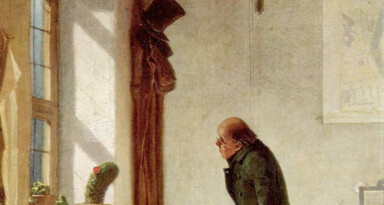
Many of us would have experienced the stupefying boredom that often accompanies scrolling through news online. Fuelled by disappointment and frustration, we keep scrolling, searching for something, anything, that will engage our attention; but after an uncertain interval we come away from the screen with a sense that one could only describe as a vast grey nothingness for having scrolled for the sake of scrolling and nothing more. There are no material rewards to be had, and rarely little to be discovered or learned, yet we find ourselves caught up in a feedback loop. For want of sounding alarmist, there’s a sense that one partly disintegrates in this scrambled mix; there’s a numbing quality to being online for sure, checking emails, searching websites, scrolling, watching…
Of course, a neurotransmitter in our brain called dopamine has much to blame for why we feel compelled to keep seeking, but rarely finding, on the internet. Dopamine is that energy boost or ‘rush’ we get for seeking out something that will be potentially rewarding for us. If in the past we got hugely rewarded for getting an A on a math’s test, for example, then dopamine would motivate us to study hard the next time so that the reward is repeated. The problem with many internet offerings is that it hacks this reward-based learning process by feeding us bite-sized rewards – a new follower on social media, an interesting email, a disaster news story – reinforcing the behaviour to check social media, our email accounts, or online news again and again. The issue is, as we all know, addiction occurs when we do something repeatedly; after a while, like drug or gambling addicts, we’re checking our novelty machines with no expectation for receiving a reward at all.
Although dopamine drives these subconscious urges, sloth is riding piggyback. Sitting, scrolling, watching, and listening requires much less energy output than cleaning, repairing, or practicing, for example. As slothful creatures, the invention of the microprocessor has been a godsend.
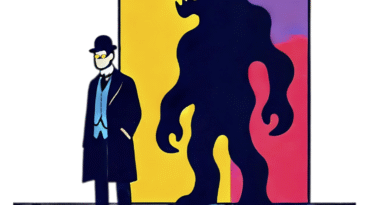
Back in 1942, C.S. Lewis wrote a satirical novel called The Screwtape Letters, consisting of a series of letters written by senior demon Screwtape to his nephew Wormwood on the subtle arts of corrupting the human soul. Screwtape advises Wormwood on how to exploit the weaknesses and habits of humans, referred to as ‘the patient’, to gradually lead him away from virtue and towards sin. Screwtape writes: “A few weeks ago you had to tempt him to unreality and inattention... but now you will find him opening his arms to you and almost begging you to distract his purpose.” Over time, the patient will no longer need to be tempted with pleasures at all, since “you will find that anything or nothing is sufficient to attract his wandering attention.” All healthy activities will be inhibited and “nothing given in return”. While Screwtape urges Wormwood that he will be anxious to report spectacular gains, he urges that it’s the cumulative effect that matters – a gradual, gentle slope “to edge the man away from the Light and out into the Nothing”.
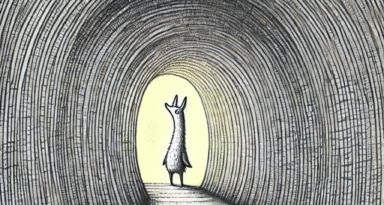
The ‘nothing’ of which Lewis speaks is a spiritual void, a state of non-being or insignificance – severely lacking in fulfilment, meaning, and purpose. In the ‘nothing’, one is neither happy nor miserable, but merely exists in a state of lukewarm indifference. However, the pull of ‘nothing’ is very strong, warns Wormwood, “strong enough to steal away a man’s best years not in sweet sins but in a dreary flickering of the mind over it knows not what and knows not why, in the gratification of curiosities so feeble that the man is only half aware of them”.
Although Lewis was writing well over half a century before the internet and smartphones became commonplace, he could well have been writing about addiction to these novelty machines.
Of course, novelty is a fine balancing act. Societies that embrace new ideas, innovation, and technological advancements typically have higher economic growth rates. Nations which are open to global trade and the exchange of new ideas and technologies tend to grow faster and have a competitive advantage in global markets. French geographer Fernand Braudel argues that novelty-seeking nations are the leaders of tomorrow: “Can it have been merely coincidence that the future was to belong to the societies fickle enough to care about changing the colours, materials, and shapes of costume, as well as the social order and the map of the world – societies, that is, which were ready to break with their traditions? There is a connection.”
Slower-growth nations, on the contrary, are more circumspect about the gains to be had from novelty. More concerned about social cohesion, cultural continuity, and stability, novelty can be perceived as a threat to the social order or as a force that could disrupt established ways of life. In such societies, social harmony and collective well-being are prioritised over innovation and technological change.
Of course, the challenge is finding that perfect balance between preserving valuable aspects of the status quo and being open to new ideas and innovation. One could visualise it as a tightrope stretched across a chasm – a sheer drop thousands of feet below. A tightrope walker steps out onto the rope carrying a long balancing pole horizontally across their body. The walker feels their body tipping to one side – and the great chasm opening before them – so they quickly move the pole in the opposite direction to counter the movement. As they tip to the other side, they reposition the pole again to keep them centred over the rope. Below, they acknowledge, is a yawning abyss into nothing. The task at hand is to ensure that they don’t tip over the edge.
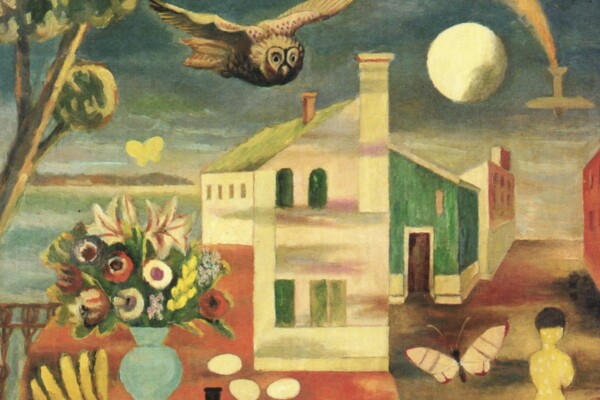
The descent into nothing
From this issue
Print subscription
Receive New Philosopher in print and enjoy full access to our digital archive.
View subscriptions