
It seems that Erving Goffman was not a nice man. He liked to ruffle feathers and watch the fallout. One time he invited a group of colleagues to dinner, save one, whom he invited to “join us for dessert”. Another time he started shouting at his colleagues in a crowded restaurant, seemingly with no aim other than to see what would happen. He got kicked out.
Erving Goffman was a first-rate sociologist, the kind who could see through a person’s skin to their tendons and then past that to their tendencies. His dissertation research included setting up a hidden camera at the front of his house so he could watch people put on their faces as they walked up. Goffman was intrigued by impression management – the lengths humans will go to ensure that others see us in a certain way – and also by how we react when things go sideways and we find ourselves embarrassed, humiliated, or otherwise “out of face.” Goffman made his living provoking ruptures and publishing his observations. Both the not nice man and the penetrating sociologist liked a good disruption because it can make visible the scaffolding we have erected to keep up appearances and protect us from other people’s negative judgments.
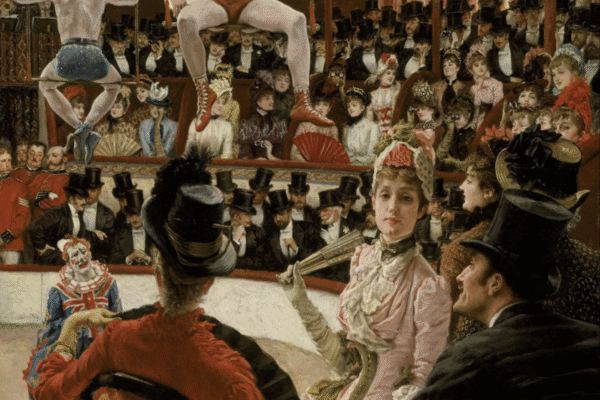
In theatrical performances, the ‘fourth wall’ refers to a similar barrier, placed between an entire audience and the backstage. It keeps us from seeing the makeup, props, and costumes that make it difficult to suspend our disbelief and surrender our imagination to the show. But fourth walls are sometimes taken down to let us in, to delight us or confuse us or make us part of the play. Fourth walls also collapse from time to time, like when the fire alarm went off at a musical I was attending. The actors initially kept singing, but they stopped when they realised that they had been upstaged by real life, and they waved at us as the curtain came down. Naked moments like these are a reminder that actors and audience are more alike than different. We are all trying to avoid embarrassing bloopers.
We strain our backs to keep fourth walls up, but we don’t do it alone. We have “teammates”, Goffman said, to help us keep the untidy backstage hidden from view. It could be at the grocery store or in a classroom, at a board meeting or around the family dinner table. Teammates work together to keep the scene from falling apart, to keep us from acknowledging that a backstage even exists. On cue, we pretend that Aunt Bea is not an alcoholic, that our coworker has not just spent half an hour crying in the bathroom, or that the child at the dinner table is not feeling shame. Jean Paul Sartre famously wrote about a woman on a date whose hand is taken by her prospective lover but continues her story as though it’s not happening. “The world, in truth, is a wedding,” wrote Goffman almost four hundred years after Shakespeare said that all the world’s a stage. We memorise our lines, hit our marks, and maintain our poise.
Fourth walls have holes, though, and through them we can catch a glimpse of what goes on behind the scenes. Sometimes we even venture backstage, to the place that Goffman’s student and sometime victim Thomas Scheff named the ERW, or Emotional/Relational World. When we start paying attention to micro-interactions, we start noticing all the things we are supposed to ignore, including other people’s looks, body language, and tone. We see things.
Granted, most of us can’t sound emotional lakes as quickly or accurately as Goffman could. It takes practice to get good at noticing what goes on in the ERW. But we usually know more than we admit. We may not understand why our colleague has been crying but we notice it. We may not turn toward our shamefaced child, but we see them. The woman on the date may not acknowledge the forward pass but she senses it. We and our teammates swallow a lot of knowledge; we work to keep the play going even as the fire alarm sounds. But why?
Perhaps we keep up appearances for show, for propriety, for ease, because it’s too awkward, out of respect for other people’s privacy, or simply because our shoulders, hands and feet are used to the weight of the wall. Maybe we ignore our micro-and sometimes macro-social interactions because we did not sign up to play new scenes and we’re nervous about ad-libbing. We have been singing the songs of our lives for so long that we can do it in winter and summer, even with a broken heart, as it were.
We all know the ‘elephant in the room’ – the topic that everyone knows is there, but no one talks about. But what about the mosquitoes in the room, the tiny things we sense but ignore? In addition to holding up the fourth wall, we burn calories pretending not to notice the breeze or faint buzzing that passes through the room. It’s the eye roll or the uncrossing of legs; it’s the shift of weight or involuntary sigh. The ERW might be why introverts or empaths get tired: we feel, we see, we notice, we absorb. Some of us are exhausted from pretending that the wind didn’t shift, that we haven’t shamed someone or been shamed, that we are exceedingly alive to the ERW. Some of us are tired of playing dumb.
What would happen if we attended to our micro-observations? What would we gain by following the rule “If you see something, say something”? “You look sad,” I recently told my boss before our meeting began. I don’t want to pretend that I am not seeing something that might be there. I am not infallible, of course; I am not a mind reader, and I might not even be as empathic as I fancy myself. But just in case, it was important for me to exercise my humanity by acknowledging the mosquito in the room. When he said he was fine I didn’t press it, but have you ever been told: “You’re the only person who sees me”? We could live in a more real world if we wanted to.
There is risk in freestyling, but improvisation skills come in handy when the wedding cake falls on the floor or the groom’s best man shows up high. Even small disruptions call for us to be present, here-and-now, alive to one another in unexpected and un-scaffolded ways. We are surrounded by moments of potential connection, if only we agree to make eye contact with mosquitoes and risk going off-script.
From the Observation edition, available from our online store